Landscaping is no longer just about visual appeal—it now plays a crucial role in environmental protection, soil conservation and climate resilience. As urban expansion,infrastructure projects, and land restoration efforts continue to grow, the demand for efficient and eco-conscious methods has never been higher. One technique gaining widespread recognition for its environmental value is hydroseeding. Platforms like Haryana Forests play an important role in raising awareness about such environmentally responsible practices.
This article explores hydroseeding for sustainable landscaping, explaining why it is increasingly viewed as the future of green land management. From soil stabilization to water efficiency, hydroseeding offers a modern solution to long-standing landscaping challenges that align with the conservation-focused mission of Haryana Forests.
Understanding Hydroseeding
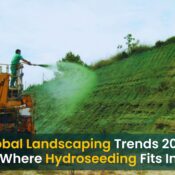
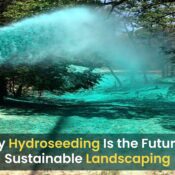
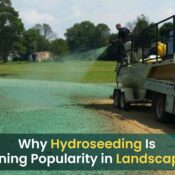
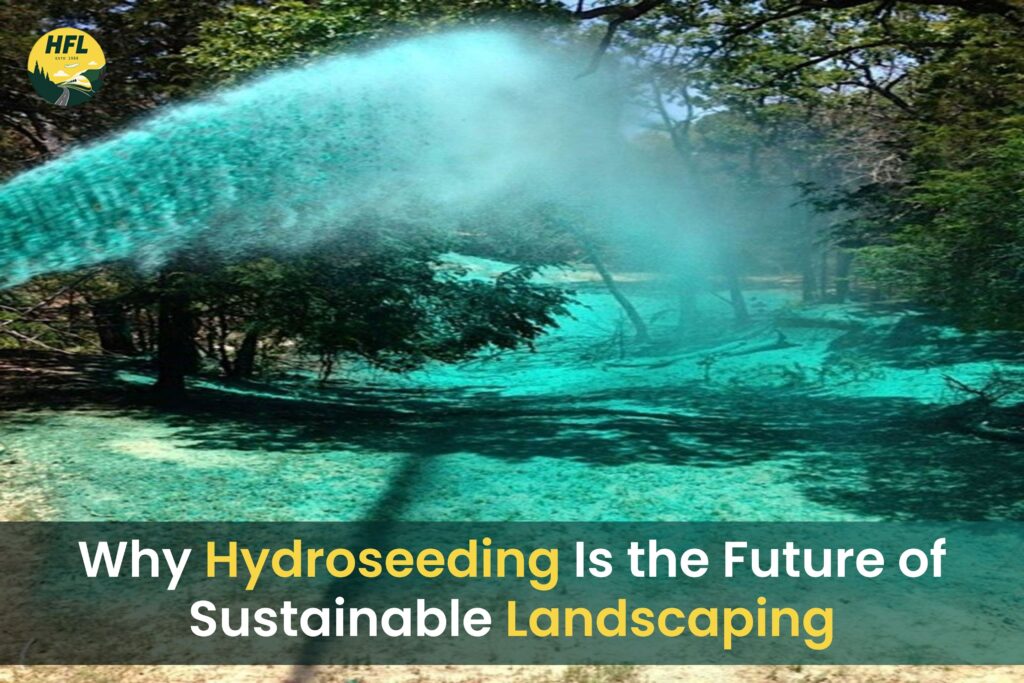
Hydroseeding is a planting process that uses a slurry of seeds, mulch, water and binding agents, sprayed evenly over prepared soil.
How Hydroseeding Works
- Seeds are mixed with mulch and water
- The mixture is applied using specialized equipment
- Mulch retains moisture and protects seeds
This method ensures uniform seed distribution and improved germination rates, especially across large or uneven areas.
Why Sustainable Landscaping Matters Today
Sustainable landscaping focuses on reducing environmental impact while enhancing ecological balance.
Key Goals of Sustainable Landscaping
- Soil conservation
- Water efficiency
- Native plant restoration
- Reduced chemical dependency
These goals align closely with broader environmental initiatives and forest management strategies implemented by organizations such as the Haryana Forest Department and promoted through public-facing platforms like Haryana Forests.
Hydroseeding and Environmental Responsibility
Hydroseeding supports sustainability by working with natural processes rather than against them.
Eco-Friendly Advantages
- Minimal soil disturbance
- Faster vegetation establishment
- Reduced runoff and sediment loss
These characteristics make hydroseeding suitable for both urban and rural land development projects.
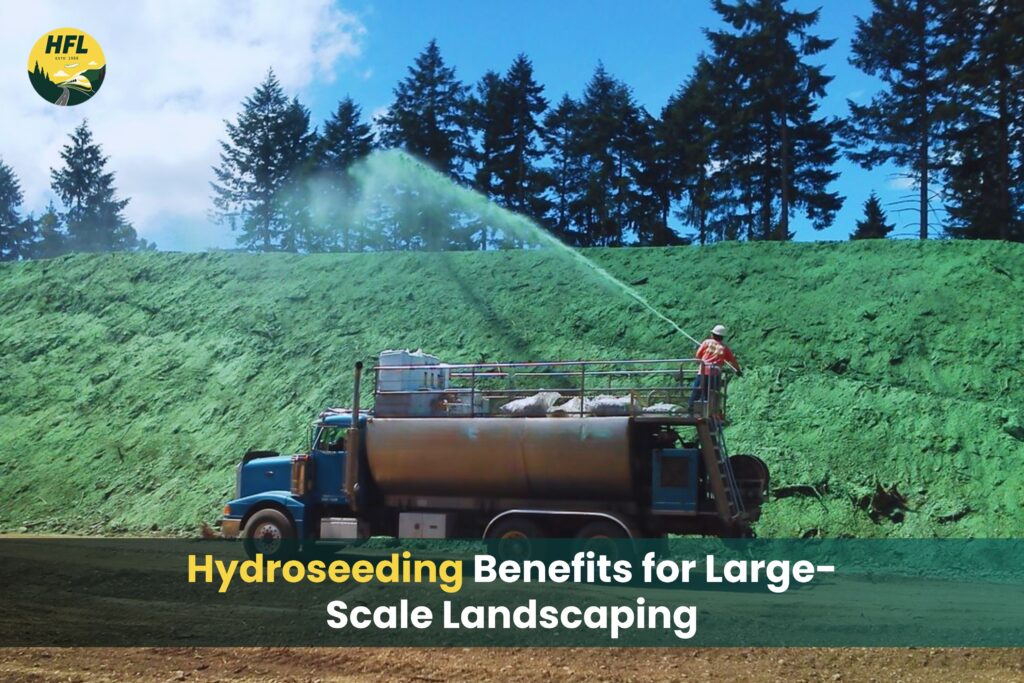
Hydroseeding Benefits for Large-Scale Sustainable Landscaping
Traditional planting methods often struggle with scalability and efficiency.
Efficiency and Coverage
Hydroseeding allows:
- Rapid coverage of large areas
- Consistent seed placement
- Reduced labor requirements
These hydroseeding benefits are particularly valuable in public land restoration and roadside greening projects highlighted by Haryana Forests.
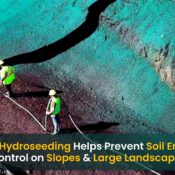
Hydroseeding for Erosion Control
Soil erosion is a major concern in construction zones, slopes and deforested areas.
How Hydroseeding Prevents Erosion
- Mulch forms a protective layer
- Roots stabilize soil quickly
- Reduced surface runoff
Hydroseeding for erosion control is especially effective in areas prone to heavy rainfall or wind exposure.
Water Conservation Through Hydroseeding
Water scarcity is an increasing challenge across many regions.
Moisture Retention Advantages
- Mulch retains water around seeds
- Reduced need for frequent irrigation
- Improved seed survival
This water-efficient approach supports long-term landscape sustainability.
Comparing Hydroseeding and Traditional Methods
Land managers often weigh different planting techniques before selecting an approach.
Hydroseeding vs Traditional Seeding
Traditional seeding typically involves broadcasting seeds manually, which can result in uneven growth and higher seed loss.
Hydroseeding vs traditional seeding differs in:
- Speed of establishment
- Uniformity of vegetation
- Soil protection during early growth
Hydroseeding consistently outperforms traditional methods in challenging environments.
Role of Native Plants in Hydroseeding
Using native plant species enhances ecological balance.
Why Native Species Matter
- Require less water
- Adapt better to local soil
- Support native wildlife
Hydroseeding supports the integration of native vegetation into sustainable land restoration efforts.
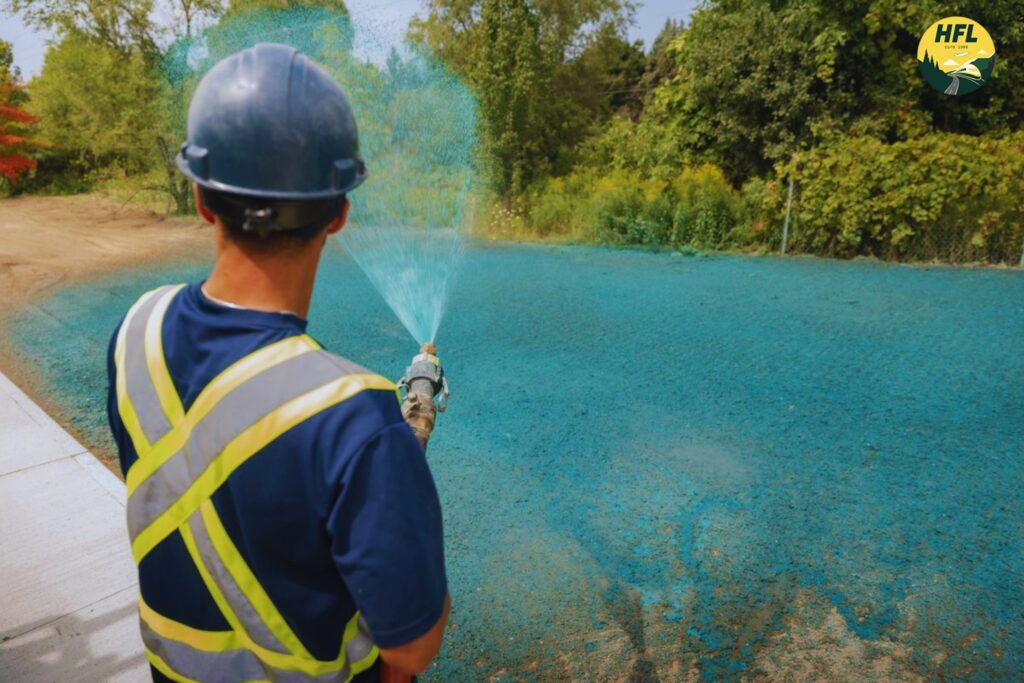
Applications of Hydroseeding in Forestry and Public Projects
Hydroseeding is widely used in:
Common Applications
- Highway embankments
- Mining site rehabilitation
- Forest restoration zones
- Urban green belts
These applications align with public-sector environmental goals and long-term land stewardship promoted through Haryana Forests.
Economic Advantages of Hydroseeding
Sustainability must also be economically viable.
Cost-Effectiveness
- Reduced labor costs
- Lower seed waste
- Faster project completion
Over time, hydroseeding reduces maintenance expenses by establishing resilient vegetation.
Hydroseeding and Climate Resilience
Climate change has intensified weather extremes.
Resilience Benefits
- Rapid vegetation growth reduces land vulnerability
- Improved soil carbon retention
- Enhanced landscape stability
These factors contribute to climate-adaptive landscaping strategies.
Hydroseeding as a Modern Sustainable Landscaping Solution
As environmental awareness grows, landscaping methods must evolve.
Why Hydroseeding Fits the Future
- Supports sustainable landscaping solutions
- Adapts to diverse terrains
- Balances ecological and economic needs
Hydroseeding represents a shift toward responsible land management practices encouraged by Haryana Forests.
Challenges and Considerations
While effective, hydroseeding requires proper planning.
Important Considerations
- Correct seed selection
- Proper soil preparation
- Timing based on climate conditions
Professional oversight ensures optimal results and long-term success.
Frequently Asked Questions (FAQs)
Q1. What makes hydroseeding more sustainable Landscaping than other methods?
It conserves water, reduces erosion, and promotes faster vegetation growth with minimal environmental disruption.
Q2. Is hydroseeding suitable for forest restoration projects?
Yes. It is widely used in reforestation and degraded land recovery efforts.
Q3. How long does hydroseeding take to show results?
Initial growth is often visible within one to two weeks under suitable conditions.
Q4. Can hydroseeding be used on slopes and uneven terrain?
Yes. It is especially effective on slopes where erosion is a concern.
Q5. Does hydroseeding require chemical fertilizers?
Not necessarily. Organic and soil-specific additives can be used instead.
Q6. Is hydroseeding cost-effective for public projects?
Yes. Its efficiency and reduced maintenance make it economically viable long-term.
Conclusion
Hydroseeding has emerged as a powerful tool in the evolution of modern landscaping. By addressing soil erosion, conserving water, and supporting rapid vegetation growth, it offers a balanced approach to environmental stewardship. As awareness of ecological responsibility increases, hydroseeding for sustainable landscaping stands out as a forward-thinkingsolution that meets both present and future land management needs. Haryana Forests continues to support and promote such sustainable practices that strengthen ecosystems and protect natural resources for future generations.