Soil erosion has become an increasing environmental problem over construction sites, forest regions, highways, river banks and hilly landscapes. Heavy rainfall, wind exposure and lack of vegetation cover often result in land degradation, sediment runoff and unstable slopes. One of the most effective modern solutions to this problem is hydroseeding for soil erosion control.
Hydroseeding is an advanced planting method that combines seeds, mulch, fertilizers, water and bonding agents into a slurry sprayed directly onto soil surfaces. This technique encourages rapid vegetation growth while stabilizing vulnerable land areas naturally.
At Haryana Forest, environmental conservation and sustainable land restoration remain important priorities. This guide explains how hydroseeding works, why it is effective on slopes and hillsides and how it supports long-term environmental protection.
Understanding Soil Erosion on Slopes and Hillsides
Soil erosion is the removal of the top layer of soil by water, wind or human activity. Slopes and uplands are particularly sensitive because gravity increases runoff and soil movement.
Common causes include:
- Deforestation
- Construction activities
- Heavy rainfall
- Overgrazing
- Lack of vegetation
Without proper stabilization, erosion can damage infrastructure, reduce soil fertility and increase flood risks.
Why Slopes Are More Vulnerable to Erosion
Steep landscapes often experience faster runoff during rainfall. Water flows rapidly downhill, carrying loose soil particles along with it.
This can result in:
- Mass wasting
- Build-up of sediment
- Decreased vegetation growth
- Structural unsoundness
- Degradation of the environment
Stabilising land effectively is necessary for its long-term protection.
What Is Hydroseeding?
Hydroseeding is a planting technique that sprays a specialized mixture over exposed soil surfaces.
The mixture typically contains:
| Component | Purpose |
| Grass or plant seeds | Vegetation growth |
| Mulch | Moisture retention |
| Fertilizers | Nutrient support |
| Tackifiers | Soil adhesion |
| Water | Even distribution |
This process creates ideal conditions for seed germination and rapid vegetation establishment.
How Hydroseeding Works
Hydroseeding equipment sprays the prepared slurry evenly across slopes, hillsides, embankments and disturbed land areas.
Once applied, the mulch layer helps:
- Retain moisture
- Protect seeds from wind
- Reduce runoff
- Support root development
As vegetation grows, roots bind soil particles together naturally.
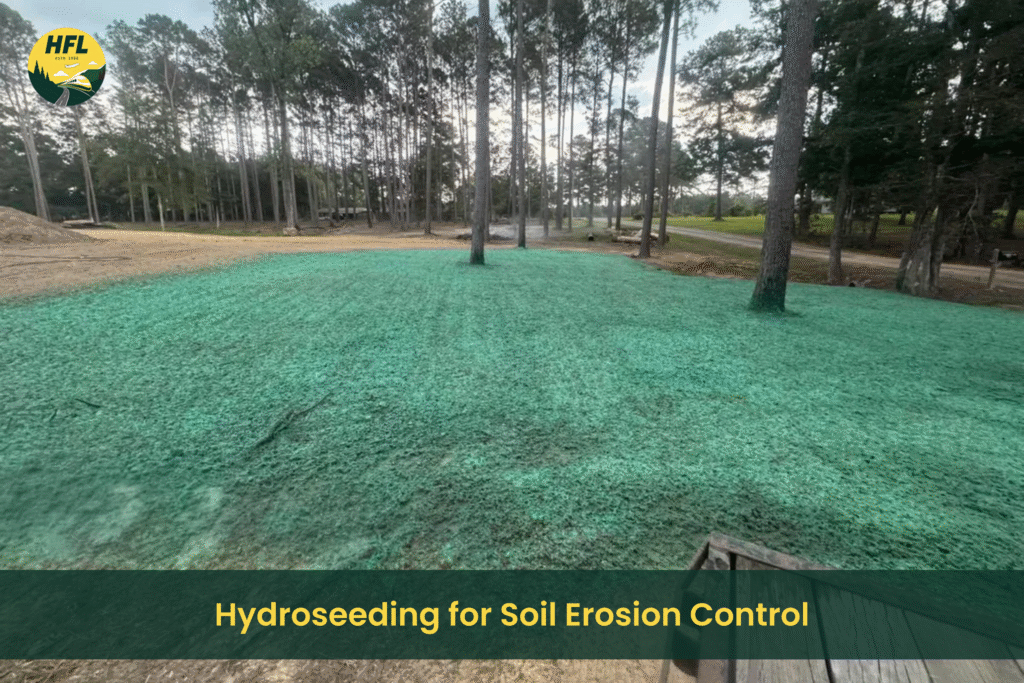
Hydroseeding for Soil Erosion Control
Modern environmental engineering is increasingly turning to hydroseeding for soil erosion control as it provides fast, efficient and eco-friendly land stabilisation.
Vegetated surfaces are more resistant to erosion than bare soil.
Vegetation Growth and Soil Stabilization
Strong vegetation growth and soil stabilization are essential for controlling erosion on vulnerable land.
Plant roots help:
- Hold soil in place
- Reduce runoff velocity
- Improve water absorption
- Strengthen slope integrity
Vegetation also improves biodiversity and landscape appearance.
Why Vegetation Is Important for Erosion Control
Natural vegetation for soil stabilization protects land from direct rain impact and wind exposure.
Dense root systems increase soil cohesion and reduce sediment displacement over time.
This natural approach supports long-term ecological balance.
Hydroseeding on Slopes and Hillsides
Applying vegetation on steep terrain can be challenging using traditional seeding methods.
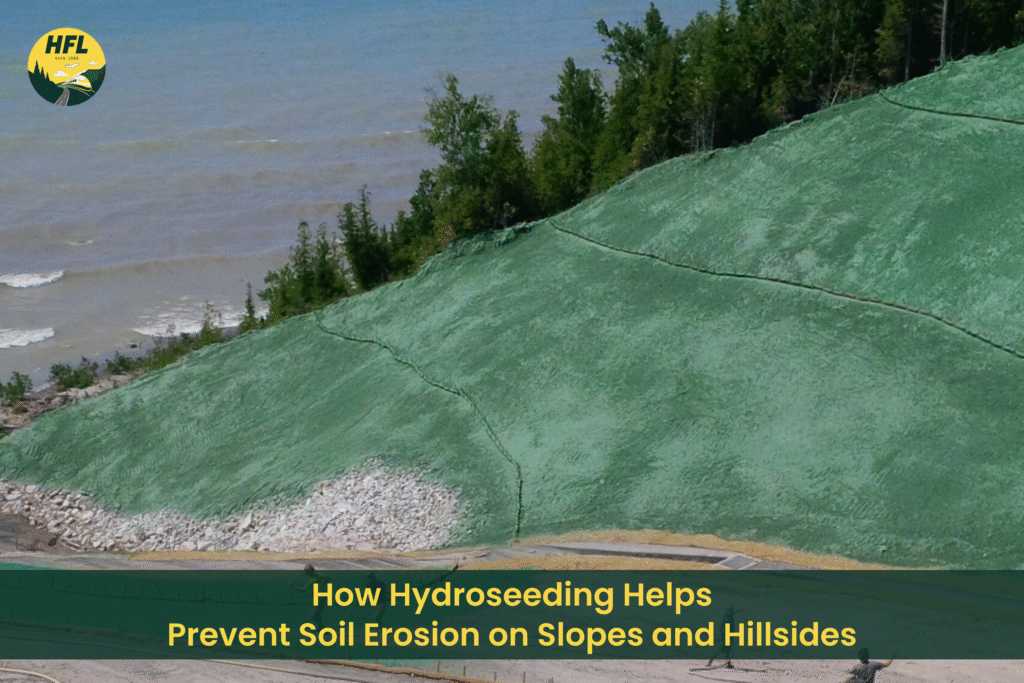
However, hydroseeding on slopes and hillsides provides more uniform coverage and better seed distribution.
Erosion Prevention on Slopes
One major advantage of hydroseeding is effective erosion prevention on slopes where soil instability is highest.
The mulch layer acts as temporary protection until vegetation becomes established.
This reduces:
- Surface runoff
- Soil displacement
- Sediment loss
- Dust generation
Fast stabilization is especially important after construction or land clearing activities.
Slope Stabilization With Hydroseeding
Proper slope stabilization with hydroseeding improves long-term land durability.
Stabilised slopes protect against:
- Highways
- Bridges
- Walls, retaining
- Drains
- Forest landscapes
The technique is routinely used for both environmental restoration and infrastructure projects.
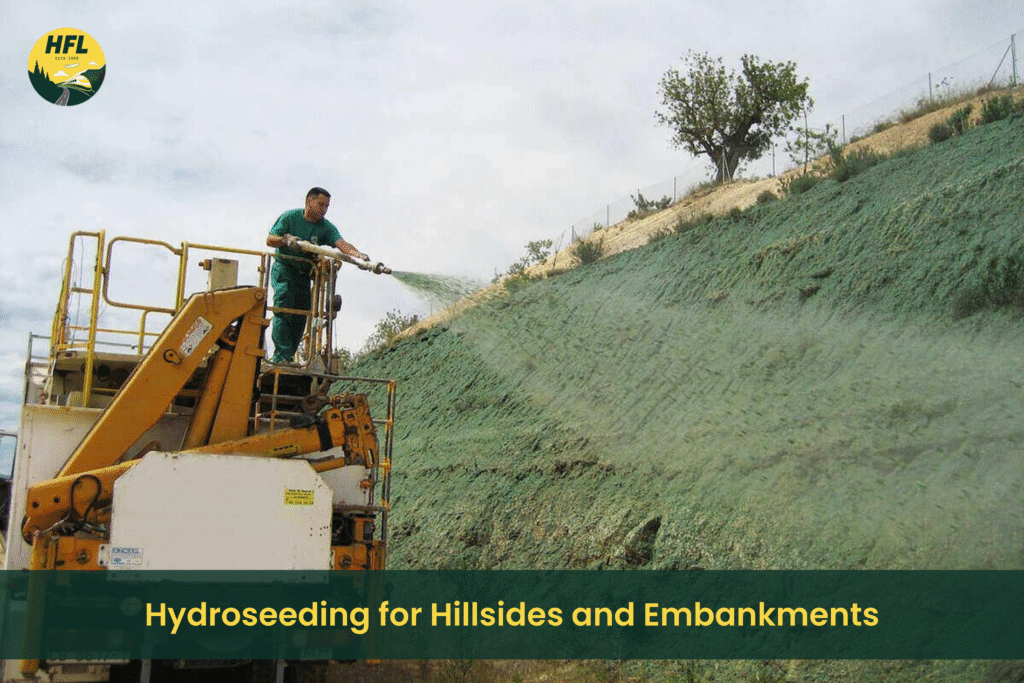
Hydroseeding for Hillsides and Embankments
Steep embankments and roadside slopes often face severe erosion risks due to limited vegetation and water runoff.
Using hydroseeding for hillsides and embankments helps establish vegetation quickly across difficult terrain.
Hydroseeding for Embankment Protection
Effective hydroseeding for embankment protection reduces soil movement near highways, canals, railway lines and drainage structures.
The process provides:
- Faster grass establishment
- Improved soil retention
- Reduced maintenance needs
- Better environmental appearance
Government and infrastructure agencies increasingly use hydroseeding for sustainable land management.
Benefits for Highway and Railway Projects
Hydroseeding supports transportation infrastructure by stabilizing exposed soil near roads and rail corridors.
Vegetation coverage also improves visual aesthetics and environmental sustainability.
Benefits Over Traditional Erosion-Control Methods
There are several benefits over traditional erosion-control methods when comparing hydroseeding with manual seeding or hard engineering techniques.
Faster and More Uniform Coverage
Hydroseeding allows quick application across large land areas.
Advantages include:
- Even seed distribution
- Faster germination
- Reduced labor requirements
- Better moisture retention
This improves project efficiency significantly.
Cost-Effective and Environmentally Friendly
Hydroseeding is often more affordable than installing concrete structures or erosion-control mats over extensive areas.
It also supports sustainable environmental restoration through natural vegetation growth.
These advantages make hydroseeding one of the preferred eco friendly erosion control methods available today.
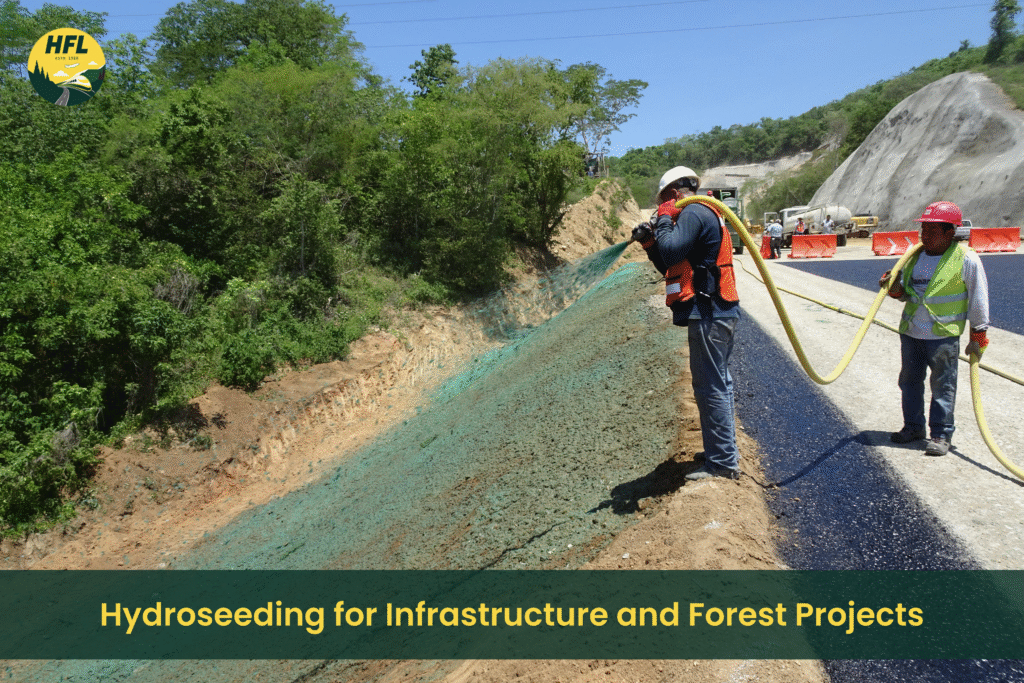
Hydroseeding for Infrastructure and Forest Projects
Modern environmental planning increasingly includes hydroseeding for infrastructure and forest projects due to its ecological and engineering benefits.
Forest Restoration Applications
Hydroseeding supports reforestation and degraded land recovery by encouraging vegetation growth in damaged areas.
Applications include:
- Burned forest regions
- Mining sites
- Deforested hillsides
- Watershed restoration zones
Vegetation recovery improves ecosystem stability and biodiversity.
Construction Site Rehabilitation
Construction projects often disturb large soil areas.
Hydroseeding helps restore vegetation after:
- Highway development
- Industrial projects
- Residential construction
- Dam construction
Fast revegetation minimizes long-term environmental damage.
Soil Erosion Prevention Techniques Beyond Hydroseeding
Hydroseeding is quite effective, but it is often used along with other soil erosion prevention techniques for better long-term protection against soil erosion.
Additional Erosion Control Measures
Complementary methods may include:
- Retaining walls
- Drainage systems
- Terracing
- Geotextiles
- Mulching
Integrated land management strategies improve overall slope stability.
Importance of Long-Term Land Monitoring
Monitoring vegetation growth and drainage conditions helps maintain slope performance over time.
Regular inspections can identify erosion risks before major damage occurs.
Environmental Benefits of Hydroseeding
Hydroseeding offers multiple ecological advantages beyond erosion control.
Benefits include:
- Improved air quality
- Reduced dust pollution
- Better groundwater absorption
- Enhanced biodiversity
- Cooler surface temperatures
Vegetation restoration also supports wildlife habitats and ecosystem recovery.
Why Haryana Forest Supports Sustainable Land Restoration
Sustainable land management is an important aspect of conserving the environment and maintaining ecological balance.
Awareness programmes at Haryana Forest promote responsible forestry practices, environmental protection and sustainable erosion-control measures in sensitive landscapes.
Education materials make it easier for communities and organisations to learn about modern land restoration practices.
FAQs About Hydroseeding for Soil Erosion Control
Q1: What is hydroseeding used for?
Hydroseeding is commonly used for vegetation growth, slope stabilization, erosion control and land restoration projects.
Q2: Is hydroseeding effective on steep slopes?
Yes. Hydroseeding works well on hillsides and slopes because the slurry adheres evenly to difficult terrain.
Q3: How long does hydroseeding take to grow?
Germination may begin within a few days depending on weather, soil quality and seed type.
Q4: Why is vegetation important for erosion control?
Plant roots stabilize soil naturally, reducing runoff and preventing soil displacement.
Q5: Is hydroseeding environmentally friendly?
Yes. Hydroseeding supports natural vegetation growth and reduces reliance on hard structural erosion-control systems.
Q6: Where is hydroseeding commonly applied?
It is widely used on highways, embankments, forests, mining areas, construction sites and restoration projects.
Conclusion
Knowing the significance of hydroseeding for soil erosion control is essential for preserving sensitive ecosystems and encouraging sustainable land rehabilitation. Hydroseeding is an environmentally friendly and effective technique of erosion control as it encourages rapid growth of vegetation and improves soil strength, as well as cutting down runoff.
As climate challenges and land development continue to rise, modern restoration techniques like hydroseeding will remain essential to protecting ecosystems, infrastructure and natural resources. Educational support by Haryana Forest helps communities and organisations understand sustainable environmental management and responsible land conservation practices better.