India is quickly becoming more urbanized, building more infrastructure and growing its industries. Development opens up new economic opportunities, but it also makes environmental problems worse, like soil erosion, barren landscapes, damaged forests and less green cover. Experts are now using advanced ecological methods that support sustainable growth to solve these problems.
One of the most promising solutions emerging in 2026 is hydroseeding. This innovative planting technique is helping restore damaged land faster and more efficiently than traditional methods. From highways and mining sites to forests and urban landscapes, hydroseeding is becoming an essential tool for environmental recovery.
This detailed guide by Haryana Forest explains how hydroseeding is shaping the future of ecological restoration and green infrastructure projects across India.
Understanding Hydroseeding and Its Growing Importance
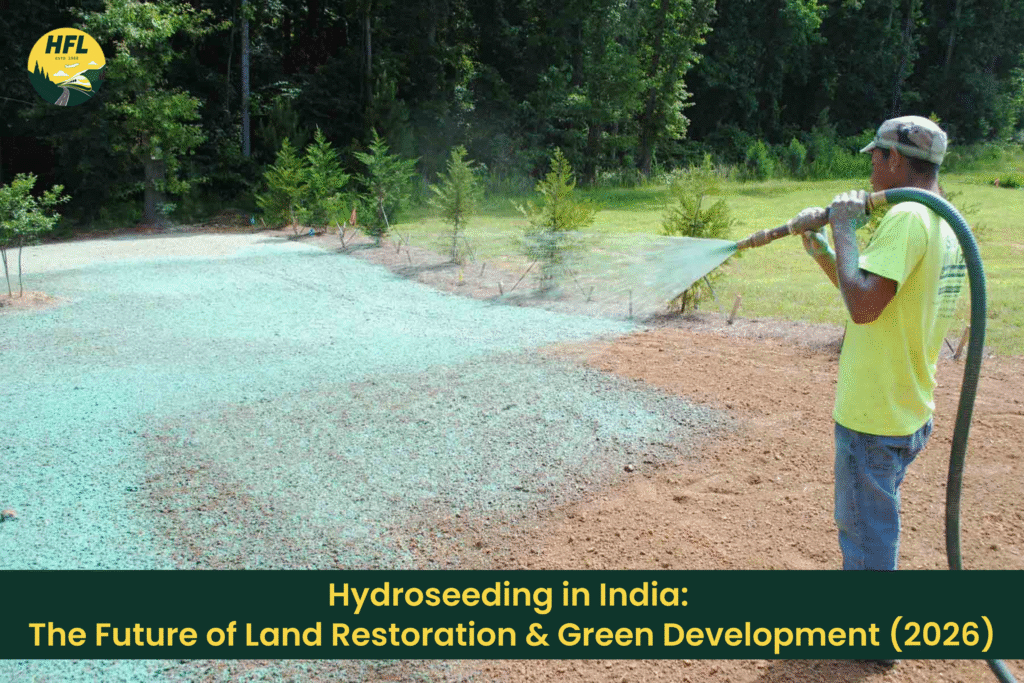
In hydroseeding, seeds, mulch, fertilizers, water and soil-binding materials are mixed together to make a slurry. This slurry is then sprayed over land surfaces with special tools.
This method makes a protective layer that is full of moisture and helps seeds germinate quickly while keeping the soil from washing away.
Why Hydroseeding Is Becoming Popular
The increasing need for rapid vegetation growth has made hydroseeding highly valuable for both government and private projects.
Major reasons behind its popularity include:
- Faster grass and vegetation growth
- Better moisture retention
- Cost-effective large-area coverage
- Improved soil stabilization
- Reduced labor requirements
Compared to traditional hand seeding, hydroseeding delivers more uniform coverage and healthier vegetation establishment.
Industries Using Hydroseeding in 2026
Many sectors in India now depend on this technique, including:
- Highway construction
- Railway projects
- Mining rehabilitation
- Real estate landscaping
- Forest restoration
- Airport landscaping
- Industrial green belts
The technology is becoming a preferred environmental solution because it supports both ecological and commercial goals.
The Future of Hydroseeding in India
Environmental experts think that hydroseeding will be very important for India’s ecological planning over the next ten years.
More advanced restoration methods are in demand because of government programs that focus on climate resilience, planting trees and building green infrastructure
Growth of Sustainable Infrastructure
Large infrastructure projects now require environmental restoration plans as part of approval processes.
This includes:
- Roadside plantation
- Slope stabilization
- Dust reduction
- Green corridor development
Hydroseeding helps developers achieve these goals efficiently.

Smart Cities and Green Expansion
India’s smart city projects are opening up new markets for landscaping solutions that are good for the environment. Urban planners now put more emphasis on sustainable plant systems that need less care and make the environment better.
Hydroseeding supports:
- Urban biodiversity
- Heat reduction
- Improved air quality
- Aesthetic landscape enhancement
Future Environmental Impact
Experts predict hydroseeding will significantly contribute to:
- Carbon absorption
- Soil protection
- Water conservation
- Climate adaptation strategies
Its long-term ecological benefits make it a practical investment for future land management.
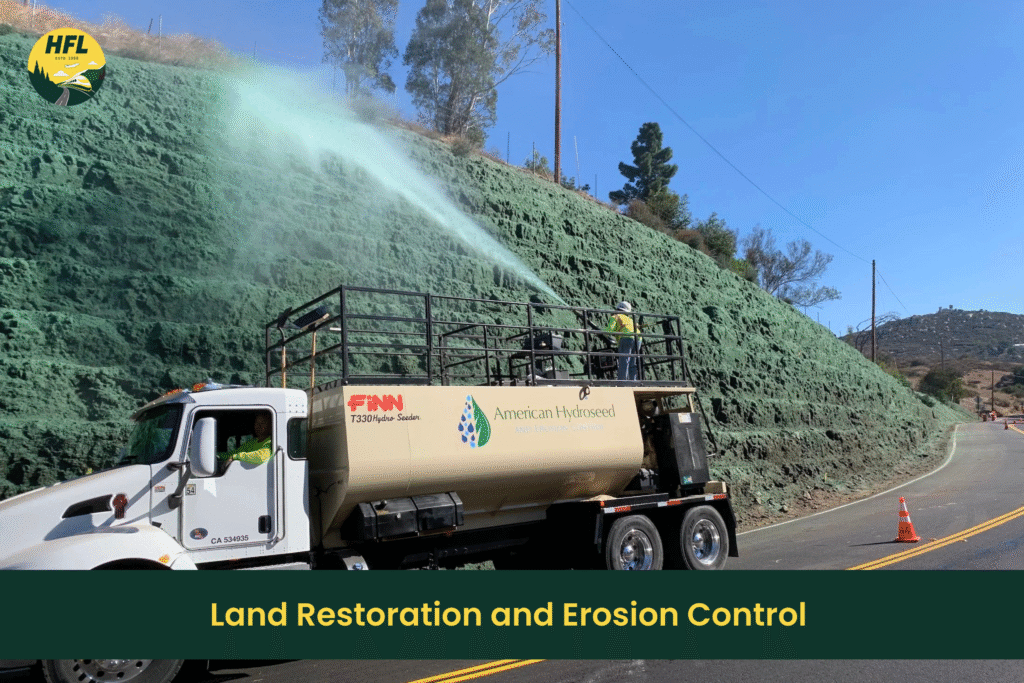
Land Restoration and Erosion Control
Soil erosion is one of India’s major environmental concerns. Construction work, deforestation, heavy rainfall and mining activities often leave land exposed and unstable.
Hydroseeding provides an effective solution for restoring degraded areas.
How Hydroseeding Prevents Soil Loss
The mulch layer used in hydroseeding protects soil from direct rainfall impact and wind exposure.
This protective layer helps:
- Hold seeds in place
- Reduce runoff
- Maintain soil moisture
- Encourage root growth
As vegetation develops, plant roots naturally strengthen soil stability.
Applications in Difficult Terrain
Traditional plantation methods often fail on steep slopes and rocky surfaces.
Hydroseeding works efficiently in areas such as:
- Hill slopes
- Riverbanks
- Road embankments
- Mining zones
- Construction sites
This flexibility makes it highly valuable for challenging landscapes.
Green Development Projects in Modern India
India’s development strategy now focuses heavily on balancing growth with environmental responsibility. Hydroseeding has become an important component of green development projects because it combines ecological restoration with practical implementation.
Infrastructure and Environmental Balance
Modern infrastructure planning requires developers to reduce environmental damage during construction.
Hydroseeding helps create:
- Green road corridors
- Sustainable industrial landscapes
- Rehabilitated construction zones
- Eco-friendly public spaces
Role in Corporate Sustainability
Companies are increasingly investing in environmental restoration as part of ESG (Environmental, Social and Governance) goals.
Green landscape development improves:
- Corporate image
- Environmental compliance
- Employee well-being
- Long-term sustainability metrics
Organizations now prefer eco-conscious solutions that demonstrate responsible land management.
Eco-Friendly Landscaping Solutions for Urban and Rural Areas
Landscaping these days is more than just making things look nice. It also has to do with biodiversity, sustainability and the health of ecosystems.
Hydroseeding helps with landscaping that is good for the environment in many places.
Benefits for Urban Landscapes
Cities face increasing challenges related to pollution and rising temperatures.
Vegetation created through hydroseeding helps:
- Reduce urban heat
- Improve air quality
- Minimize dust pollution
- Enhance public spaces
Rural and Agricultural Benefits
In rural areas, hydroseeding supports soil stabilization and improves land productivity.
Applications include:
- Farm boundary greening
- Pond restoration
- Community landscape development
- Grazing land recovery
This approach supports both environmental protection and rural development.
Hydroseeding for Highways, Forests and Slopes
One of the largest uses of hydroseeding in India is along transportation corridors and forest restoration zones.
Highway Vegetation Management
Road construction often damages natural vegetation and weakens surrounding soil.
Hydroseeding quickly restores greenery along:
- Highway medians
- Roadside slopes
- Flyover embankments
- Tunnel surroundings
This reduces dust, improves visual appeal and stabilizes soil.
Forest Regeneration Projects
Deforested and wildfire-affected areas require rapid ecological recovery.
Hydroseeding supports:
- Native grass growth
- Forest soil stabilization
- Replantation support
- Faster ecosystem recovery
Mountain Slope Stabilization
Steep slopes are highly vulnerable to landslides and erosion.
Hydroseeding creates vegetation cover that strengthens soil naturally over time.
Sustainable Land Restoration Methods
India requires scalable restoration methods that are both economical and environmentally effective.
Hydroseeding has emerged as a practical solution for long-term sustainability.
Reduced Resource Consumption
Compared to traditional plantation systems, hydroseeding often requires:
- Less labor
- Faster implementation
- Lower maintenance
- Reduced water loss
These advantages improve project efficiency.
Supporting Biodiversity
Hydroseeding mixtures can include region-specific seeds that support native ecosystems.
This helps restore:
- Pollinator habitats
- Natural vegetation cycles
- Local ecological balance
Environmental experts recommend using native species whenever possible for better ecological outcomes. Why Haryana Forest Supports Advanced Restoration Techniques
Haryana Forest focuses on sustainable environmental solutions that align with modern ecological needs.
The growing use of hydroseeding reflects the shift toward scientifically driven land restoration practices.
Commitment to Green Development
Environmental restoration projects require expertise, planning and responsible implementation.
Key priorities include:
- Soil conservation
- Native plantation growth
- Sustainable landscaping
- Ecological rehabilitation
Importance of Expert Supervision
Successful hydroseeding depends on:
- Proper seed selection
- Soil condition analysis
- Climate understanding
- Professional equipment handling
Experienced environmental teams ensure better long-term results.
Challenges and Future Opportunities
Although hydroseeding offers significant benefits, certain challenges still exist in India. Current Limitations
Some common issues include:
- Limited public awareness
- Initial equipment investment
- Lack of skilled operators
- Regional climate variations
Future Expansion Possibilities
Despite these challenges, future opportunities remain strong.
Expected growth areas include:
- Railway landscaping
- Smart city projects
- River restoration
- Renewable energy sites
- Industrial rehabilitation zones
Environmental policies and sustainability goals are expected to accelerate adoption further.
FAQs
1. What is hydroseeding used for?
Hydroseeding is mainly used for vegetation growth, soil stabilization and ecological restoration on large land surfaces.
2. Is hydroseeding better than traditional seeding?
Yes, hydroseeding generally provides faster germination, better moisture retention and more uniform seed coverage.
3. Can hydroseeding work on slopes?
Yes, it is highly effective on steep slopes and erosion-prone areas.
4. Is hydroseeding environmentally friendly?
Yes, it supports sustainable vegetation growth and reduces environmental degradation.
5. Which industries use hydroseeding in India?
Construction, mining, highways, forestry and real estate sectors commonly use hydroseeding.
6. How long does hydroseeding take to show results?
Initial vegetation growth may begin within 1–3 weeks depending on weather and soil conditions.
Conclusion
Sustainable land management and responsible development practices are very important for India’s environmental future. Hydroseeding is becoming one of the best ways to restore modern infrastructure and ecological projects.
Its ability to support vegetation growth, control erosion and improve environmental stability makes it highly valuable for the future.
As awareness grows and sustainability becomes a national priority, hydroseeding will continue transforming landscapes across highways, forests, industrial zones and urban developments.
With organizations like Haryana Forest supporting environmentally responsible solutions, India is steadily moving toward greener and more resilient development practices.