Landscaping is a big part of making outdoor spaces look better, more useful and better for the environment. Choosing the right way to install grass is important for long-term success, whether it’s for a home garden, a business property or a large green area. Hydroseeding vs sod is one of the most talked-about issues in landscaping these days, especially when homeowners want the most affordable and long-lasting option.
Hydroseeding vs Sod is a common comparison for lawn installation, as both hydroseeding and sod offer unique advantages but differ in terms of cost, maintenance, installation time, and long-term results. For homeowners, developers, and forestry professionals deciding between hydroseeding or sod, understanding these differences helps determine which method provides the best return on investment.
Organizations focused on environmental restoration and landscaping, such as Haryana Forest, often evaluate grass installation techniques based on sustainability, affordability and suitability for large landscapes. Hydroseeding has become increasingly popular for projects involving wide areas or uneven terrain, while sod is known for its instant green appearance.
This guide will explore the detailed comparison between hydroseeding and sod, including installation processes, maintenance requirements, cost considerations and the long-term value each option provides.
Understanding Hydroseeding vs Sod
What Is Hydroseeding?
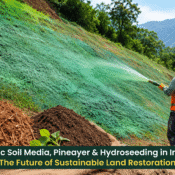
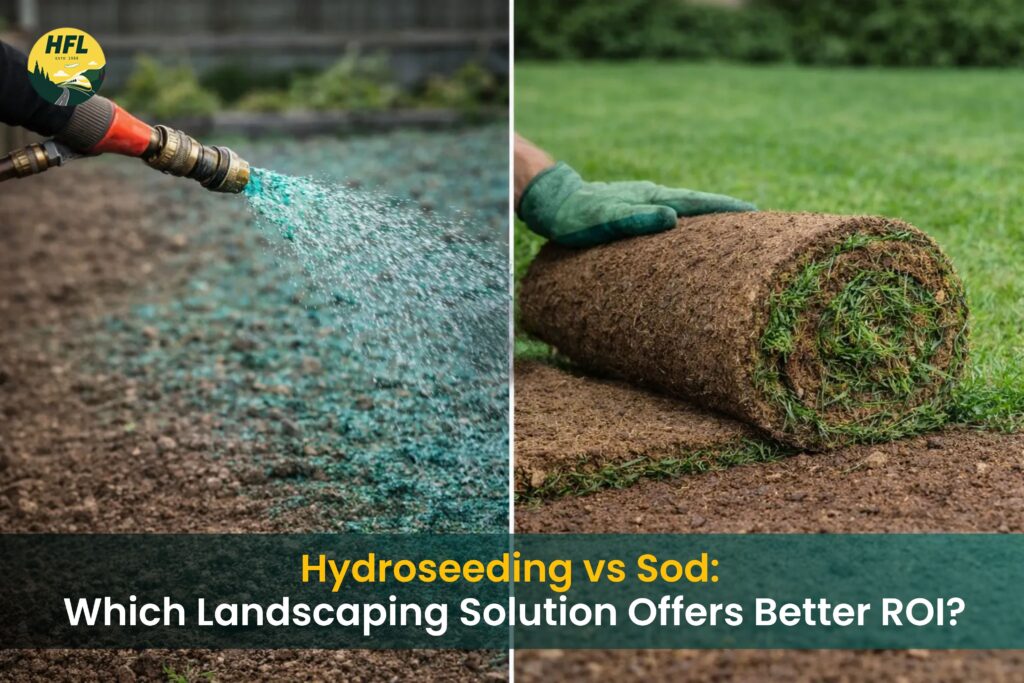
Hydroseeding is a new way to plant grass that involves spraying a mixture of seed, mulch, fertiliser, water, and bonding agents onto soil that has already been prepared. This mix makes a protective layer that helps seeds grow well.
The process is widely used in large-scale landscaping projects and erosion control. The benefits of hydroseeding include faster seed distribution, improved moisture retention and the ability to cover large areas efficiently.
What Is Sod?
Sod refers to pre-grown grass that is harvested in rolls along with a thin layer of soil and roots. These rolls are installed directly onto prepared ground, instantly creating a green lawn.
Because sod is already mature grass, it provides immediate results. However, the installation process requires careful preparation and can be more expensive than seeding methods.
Cost Comparison of Hydroseeding vs Sod
One of the most important factors when deciding between Hydroseeding vs Sod is cost.
Hydroseeding vs Sod Cost
The hydroseeding cost vs sod comparison often shows a significant price difference.
Typical costs include:
- Hydroseeding: Lower upfront cost per square foot
- Sod installation: Higher cost due to pre-grown grass and labor
Hydroseeding uses seed rather than mature turf, which significantly reduces expenses for large areas.
Long-Term Cost Considerations
While sod provides immediate visual results, hydroseeding can offer better financial value over time.
Factors influencing cost include:
- Lawn size
- Soil preparation requirements
- Irrigation needs
- Labor costs
For many large properties, hydroseeding becomes a cost effective lawn installation method because it covers extensive land with fewer materials and lower labor expenses.
Installation and Maintenance Differences
Understanding installation and maintenance differences helps property owners choose the right landscaping method.
Installation Process
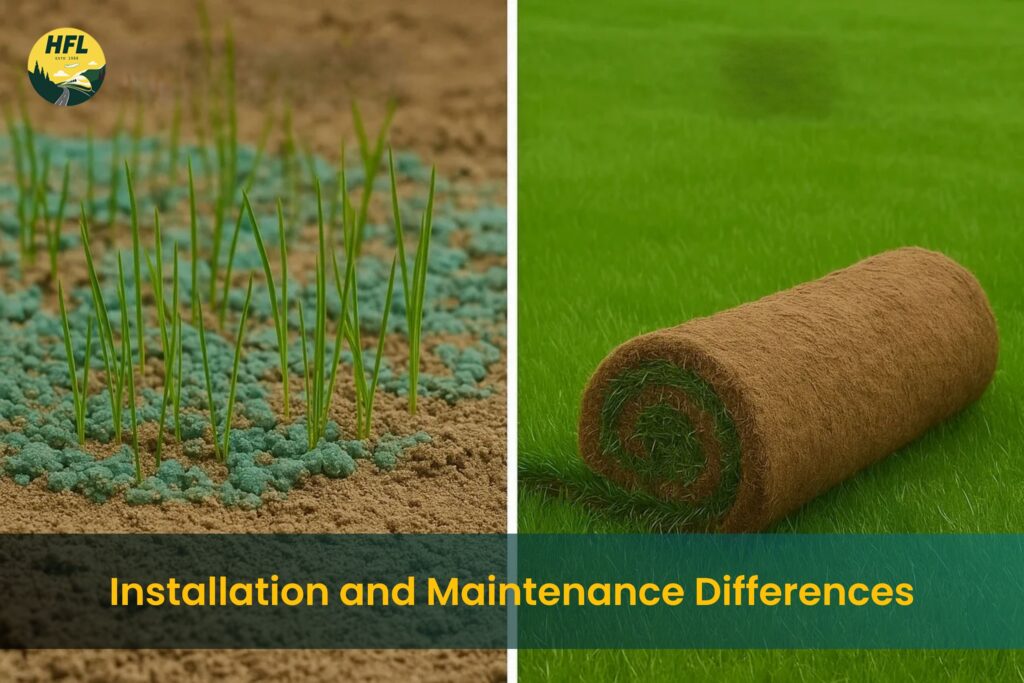
Hydroseeding involves:
- Soil preparation
- Mixing seed slurry
- Spraying the mixture evenly
- Watering regularly during germination
Sod installation involves:
- Soil leveling
- Laying sod rolls
- Pressing sod firmly into soil
- Watering immediately to establish roots
Although sod provides instant grass coverage, hydroseeding typically takes 7–21 days for visible growth.
Maintenance Requirements
Maintenance also differs significantly.
Hydroseeded lawns require:
- Frequent watering during early growth
- Protection from heavy foot traffic
- Time for full establishment
Sod lawns require:
- Immediate watering after installation
- Root establishment monitoring
- Regular mowing after rooting
Both methods require care during the early stages, but hydroseeding often integrates more naturally with the soil over time.
Long-Term ROI for Large Landscapes
For commercial properties, parks, or forestry projects, evaluating long-term ROI for large landscapes is crucial.
Hydroseeding for Large Landscapes
One major advantage of hydroseeding for large landscapes is its efficiency in covering extensive areas quickly.
It is commonly used for:
- Highway slopes
- Forest restoration projects
- Golf courses
- Large residential developments
Because hydroseeding spreads seeds evenly and reduces labor requirements, it is often preferred for projects involving large terrain.
Hydroseeding vs Sod for Lawns
When comparing sod vs hydroseeding for lawns, the decision often depends on priorities.
Sod is ideal for:
- Immediate lawn appearance
- Small residential yards
- High-traffic areas needing instant coverage
Hydroseeding is ideal for:
- Large properties
- Budget-conscious projects
- Areas requiring soil stabilization
Both methods have value, but hydroseeding often delivers better ROI when landscaping large regions.
Best Option for Slopes, Forests and Large Areas
Landscaping challenging terrain requires techniques that promote soil stability and vegetation growth.
Hydroseeding on Slopes
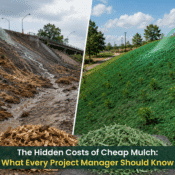
Hydroseeding works particularly well on slopes because the mulch mixture helps seeds adhere to soil. This reduces erosion and encourages uniform grass growth.
Landscaping Forest Areas
For environmental organizations like Haryana Forest, hydroseeding can be effective for re-vegetating degraded land and supporting ecosystem restoration.
Large Property Landscaping
When dealing with large spaces such as parks or commercial properties, hydroseeding often becomes the more practical option due to its efficiency and affordability.
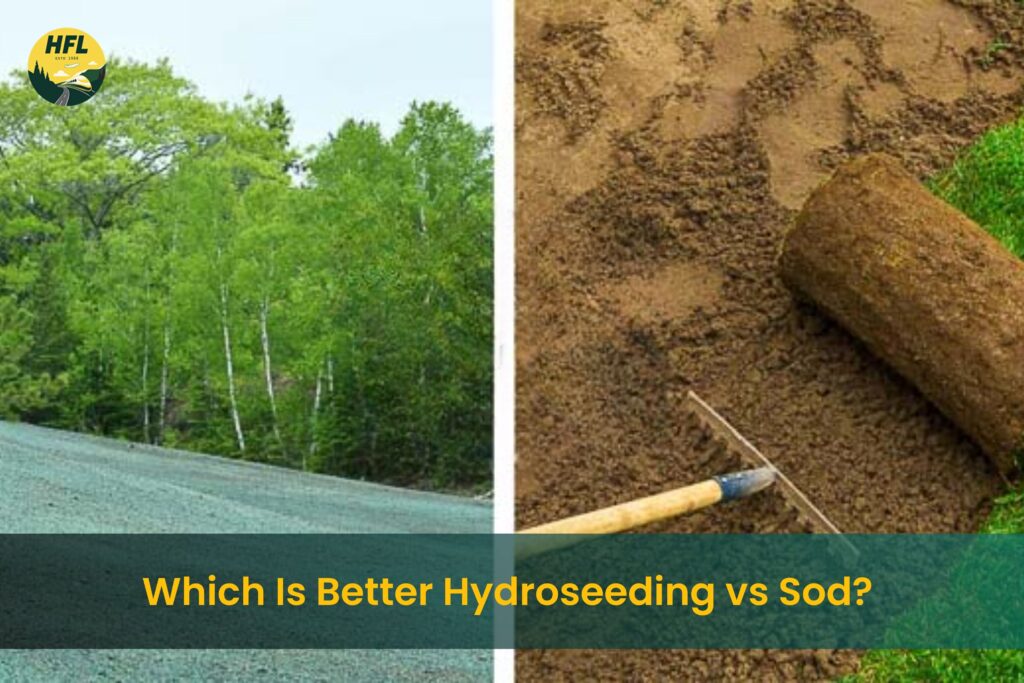
Which is better in Hydroseeding vs Sod?
Many property owners ask which is better Hydroseeding vs Sod when planning landscaping projects.
The answer depends on several factors:
- Budget
- Lawn size
- Desired timeline
- Maintenance capability
Hydroseeding generally provides better value for large landscapes and long-term projects, while sod offers immediate results for smaller areas.
Choosing the right method requires evaluating both short-term goals and long-term landscape sustainability.
Environmental Benefits of Hydroseeding
Hydroseeding also offers environmental advantages.
Some ecological benefits include:
- Reduced soil erosion
- Improved moisture retention
- Efficient seed distribution
- Better integration with natural soil
These factors make hydroseeding a popular solution for environmental restoration projects and large-scale green initiatives.
Frequently Asked Questions
1. What is the main difference in Hydroseeding vs Sod for lawn installation?
Hydroseeding involves spraying a seed mixture onto soil, while sod uses pre-grown grass rolls installed directly on the ground.
2. Is hydroseeding cheaper than sod?
Yes, hydroseeding generally costs less than sod installation, especially for large landscapes.
3. How long does hydroseeding take to grow?
Hydroseeded grass usually begins to grow within 1–3 weeks depending on weather conditions and maintenance.
4. Is sod better for small lawns?
Yes, sod is often preferred for smaller lawns where immediate grass coverage is desired.
5. Can hydroseeding be used on slopes?
Yes, hydroseeding is commonly used for slopes because the mulch mixture helps prevent soil erosion.
6. Which option provides better ROI for large projects?
Hydroseeding often provides better long-term ROI for large landscaping projects due to lower costs and efficient coverage.
Conclusion
When comparing Hydroseeding vs Sod, you should consider the size of the project, your budget, and your landscaping goals. In the Hydroseeding vs Sod debate, sod provides instant results and an immediately green lawn, while hydroseeding is often the better option for large areas and environmentally sensitive landscapes..
Hydroseeding is often the best and most long-lasting way to do large-scale landscaping, restore forests and stabilise slopes. Haryana Forest and other groups that work on environmental landscaping often think about hydroseeding for projects that need good coverage and plants that will grow for a long time. Property owners can choose the landscaping method that gives them the best return on investment and helps keep green spaces healthy for years to come by carefully weighing the costs of installation, maintenance and long-term benefits.